ANews from the agent stack.
✎ Suggest◎ Sign in⚙ Admin

Deep dives into working agents.

Technical walkthroughs with substance: architectures, prompting patterns, evals, and production lessons unpacked until complex agent systems become reusable design material.
Page 1 of 2 · showing 1–24 of 44

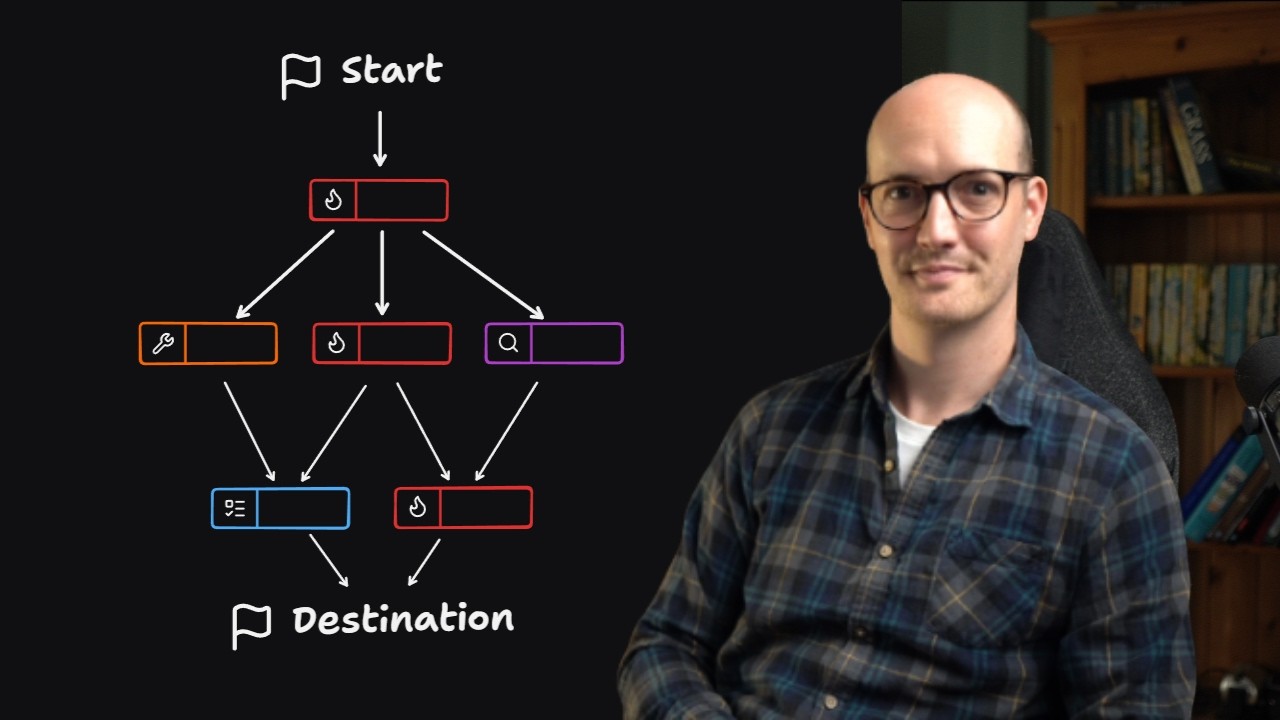
A Formal Language for Writing Agent Instructions: Matt Pocock's Skills v1.2.0

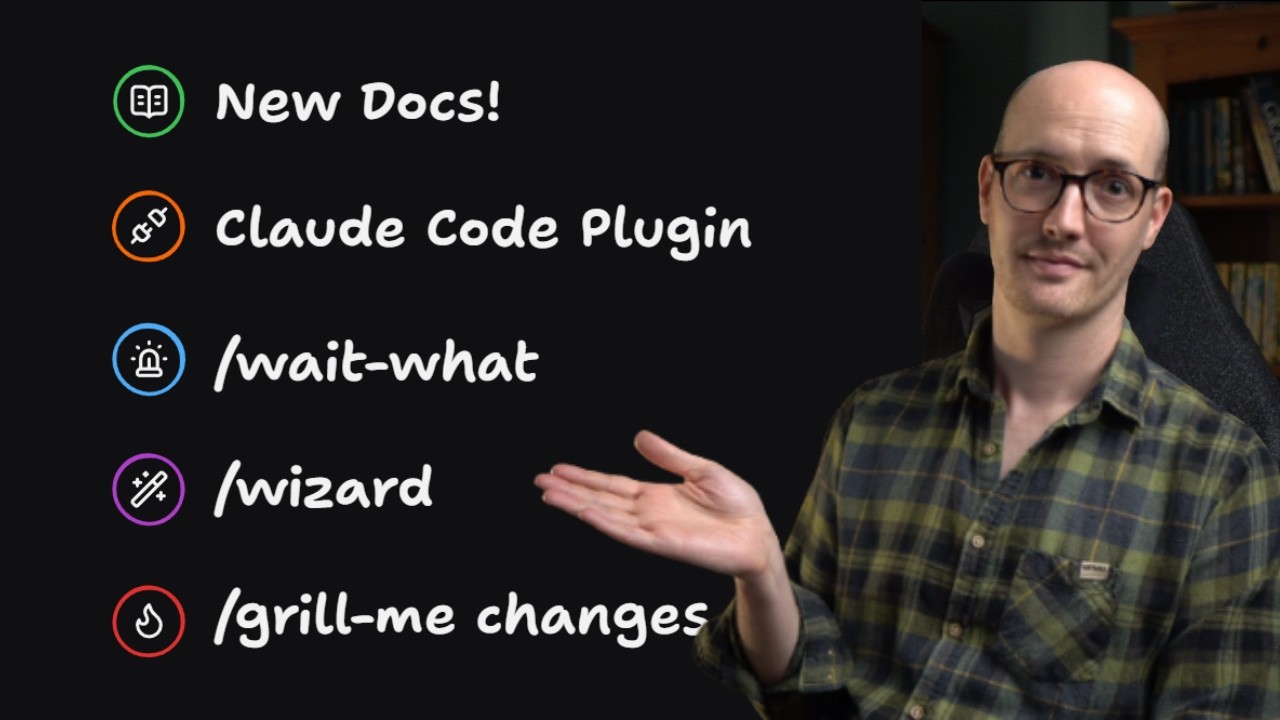
A twelve-minute walkthrough of five new skills and a major infrastructure update for the most-starred agent skills repository on GitHub — now 204K stars, MIT-licensed, and an official Claude Code marketplace plugin alongside new Codex sidecar files. The headliner is /wait-what for Opus verbosity, /grill-me with multi-question dependency graphs, and /wizard for deterministic provisioning — but the skill nobody called exciting is the one worth reading: /writing-for-agents, an 81-line formal language for designing instructions agents consume — context pointers, the two loads, information hierarchy, completion criteria, leading words, negation as a failure mode, and pruning.

deep-divesDownload
Matt Pocock
Published2026-08-05

Forgetting as the Compression Step: Tencent's Agent Memory Engine, Checked

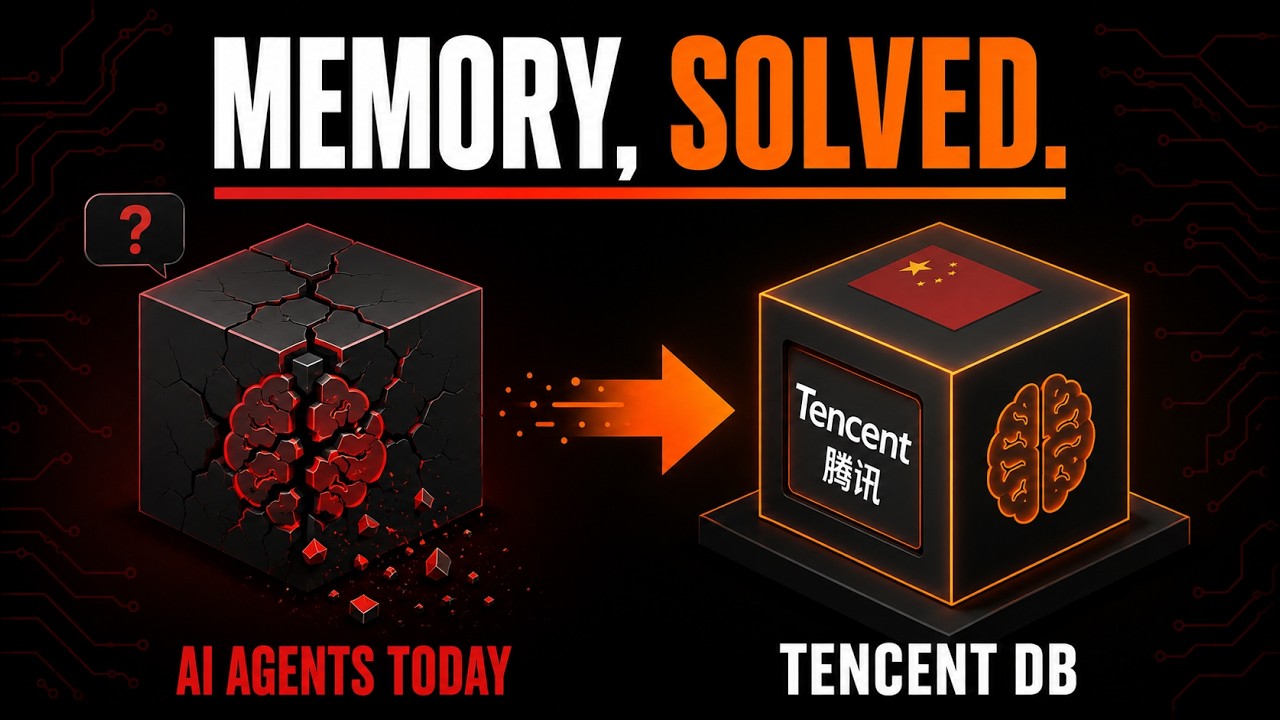
Tencent open-sourced an MIT agent-memory plugin that improves results by throwing information away: verbose tool logs fold into a Mermaid graph with node_ids you can grep back, and long-term memory climbs an L0-to-L3 pyramid modelled on Tulving's 1972 consolidation arrow. The repo is real (10,811 stars), the architecture is documented, and the benchmark table publishes raw token counts - so the presenter divides them on camera and finds one row that does not reconcile: SWE-bench prints -33.09% but computes to -31.63%. He also flags that every number is vendor-produced with no independent reproduction, and names the open GitHub issue where prompt-cache invalidation claws back part of the saving. The gains shrink as tasks get harder: +51.52% on WideSearch, +9.93% on SWE-bench. The video's own description gets this wrong; the video does not.

deep-divesDownload
Cloud Codes
Published2026-08-02

Wayfinder: Planning as a Map You Can Leave and Return To

Most agent planning tools die at the edge of a context window, and the real cost is not lost notes but trimmed ambition. Matt Pocock's Wayfinder skill moves the plan out of the session and into the issue tracker as a map of decision tickets, so work outlives any single conversation. Reading the skill source alongside the video surfaces two constraints the video never states: every ticket is either human-in-the-loop or agent-driven, and the skill forbids an agent standing in for the human's side of a discussion — the rule that keeps a decision map from looking complete while encoding nobody's judgement.

deep-divesDownload
Matt Pocock
Published2026-07-30

This Skill Just Made Kimi K3 A 10x Better Designer

AI LABS tests Kimi K3's frontend design capabilities against Claude and GPT, then introduces Hallmark — an anti-AI-slop design skill with 58 detection gates, 100+ references, and four verbs (default, audit, redesign, study) that strips every model's default patterns and produces intentional, original designs.

deep-divesDownload
AI LABS
Published2026-07-25

System Prompts Leaks GitHub Explained: What AI Agent Prompts Reveal

Alex Hitt breaks down the system_prompts_leaks repository — 43,600+ stars on GitHub — revealing how researchers verify leaked AI system prompts, the four-layer architecture inside commercial models, and why prompt obfuscation as a competitive moat is dead.

deep-divesDownload
Alex Hitt
Published2026-07-25

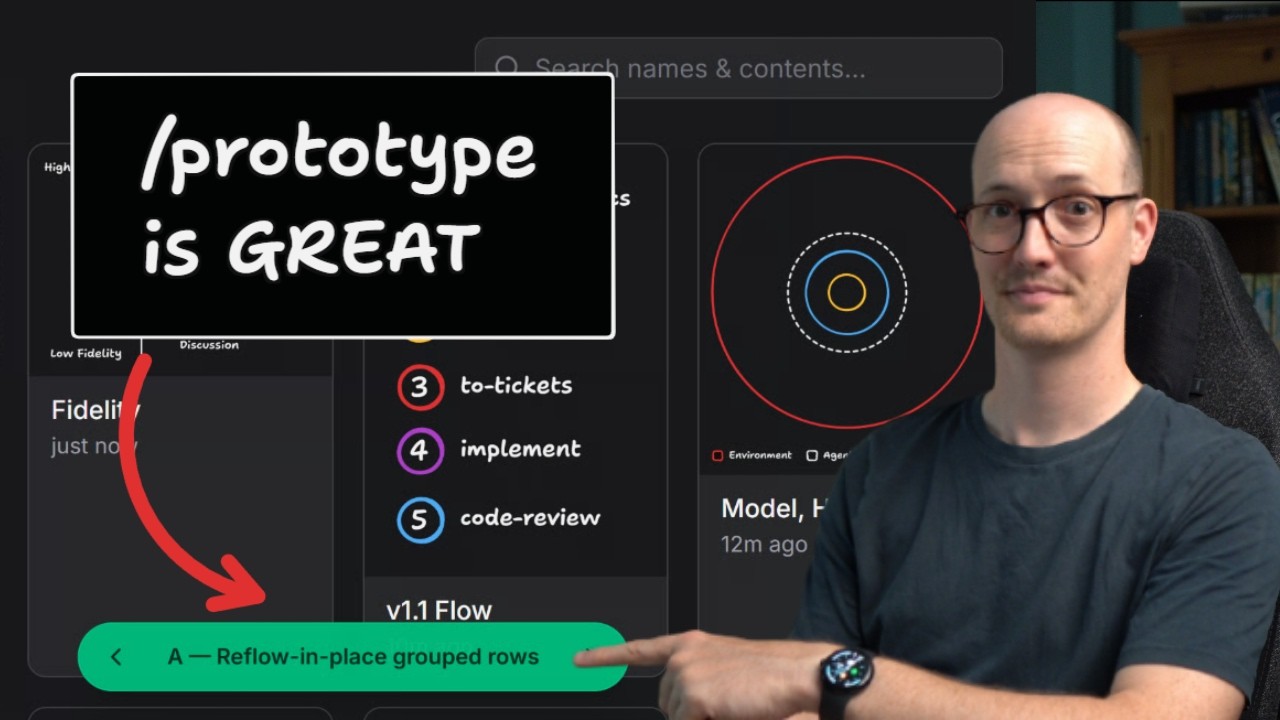
Don't Waste Time on Specs — /prototype Instead

Matt Pocock argues that spec-driven AI development wastes effort. His /prototype skill creates throwaway code artifacts at higher fidelity than discussion, letting you iterate on live UIs and logic before handing off to production — bridging the gap between spec and working software.

deep-divesDownload
Matt Pocock
Published2026-07-23

What Would It Cost to Run Claude Fable 5 Locally?

deep-divesDownload
Editorial
Published2026-07-21

Kimi K3: An Open Source #1 — Coding Tests vs Fable 5, Opus 4.8 & GPT-5.6 Sol

deep-divesDownload
Editorial
Published2026-07-20

Codex vs Fable: Which AI Agent Picked the Better Problem?

Nate B Jones gave Fable and Codex the same open brief: inspect his real business and build the automation that matters. Fable chose the higher-leverage strategic problem; Codex chose the safe, finishable one. Neither was wrong — they optimized for different things. The real unlock: letting AI help choose the problem, not just the tool.

deep-divesDownload
Nate B Jones
Published2026-07-17

I Replaced Hermes Agent And OpenClaw With This

deep-divesDownload
Editorial
Published2026-07-17

mattpocock/skills: Learn the Whole Flow, End-to-End

First proper tutorial for the 162K-star skills repo (7.5M downloads, 38 skills). Complete main flow walkthrough: install via npx, configure issue tracker (GitHub/Jira/Linear/local), grill-with-docs interview, to-spec compression, to-tickets breakdown (each ticket = one context window), implement with auto code review via sub-agents. Smart zone concept (~140K tokens). Only 660 tokens context load despite 38 skills.

deep-divesDownload
Matt Pocock
Published2026-07-16

Claude Fable, Claude Tag, and Anthropic's Culture — Cat Wu & Thariq Shihipar ft Simon Willison

deep-divesDownload
Editorial
Published2026-07-15

Don't Ship Skills Without Evals — Philipp Schmid, Google DeepMind

Philipp Schmid (Staff Engineer, Google DeepMind) reveals that almost none of 50,000+ indexed skills have evals. Covers the full lifecycle: capability vs preference skills, 8 writing tips, a practical eval harness (117 test cases, ~90% accuracy for Gemini Interactions API), and Google DeepMind's CI-style eval workflow where skill changes don't merge without improving tests.

deep-divesDownload
Philipp Schmid
Published2026-07-14

This Skill Makes Claude BRUTALLY Honest About Your Ideas

Brad built a /focus-group skill that clones your real customers into AI agents. Paste any landing page, offer, or email and get honest reactions — not yes-man validation. Two-round system with persistent memory, real customer quotes, and actionable holdout analysis.

deep-divesDownload
Brad | AI & Automation
Published2026-07-09

12 Hidden Settings to 10x Your Claude Code

Claude Code has hundreds of settings but you only need 12. Notification sounds, mobile push, smart allow lists (/fewer-permission-prompt), deny rules (.env + git push), Opus Plan + Sonnet Build (halve usage), effort level sweet spot (max is a trap), privacy/telemetry off, history retention 365 days, auto-compact at 75%, status line monitoring, prompt stashing (Ctrl+S), and removing AI commit attribution. Plus bonus: the prompting shift from steps to outcomes.

deep-divesDownload
Simon Scrapes
Published2026-07-08

Skills v1.1: /wayfinder, /research, /implement, /to-spec, /to-tickets

Matt Pocock releases Skills v1.1 — major update (160K stars, 7M downloads). Star feature: Wayfinder for planning large projects via GitHub Issues with blocking relationships. Plus: complete SDLC flow (Grill→Spec→Tickets→Implement→Code Review), Martin Fowler refactoring smells in code review, and grilling improvements.

deep-divesDownload
Matt Pocock
Published2026-07-08

OpenCV 5 Is Here — The Biggest Update Since 2018 (We Tested It)

Better Stack tests OpenCV 5's brand-new DNN engine — ONNX operator coverage jumped from 22% to 80%, enabling YOLO, stable diffusion, and VLMs to run natively on CPU with zero extra dependencies. Four hands-on demos included.

deep-divesDownload
Better Stack
Published2026-07-05

The Best AI Agents Need Less Code Than You Think — LangSmith Engine Deep Dive

Deep dive into LangSmith Engine — an always-on agent that hunts production trace failures, clusters issues, and opens fix PRs. Org-chart architecture with 4 sub-agents (screener, verifier, issue creator, fix generator). Self-improving: Engine runs on its own traces. From noisy PRs to an issue inbox.

deep-divesDownload
LangChain
Published2026-07-02

Building Great Agent Skills: The Missing Manual

Matt Pocock presents a four-part checklist (Trigger, Structure, Steering, Pruning) for escaping "skill hell" — a structured framework for building, evaluating, and maintaining high-quality agent skills.

deep-divesDownload
Matt Pocock
Published2026-06-29

GLM-5.2 vs MiniMax-M3 — Opus Has REAL COMPETITION (Model Stacking)

IndyDevDan analyzes GLM-5.2 and MiniMax-M3 — the open-weight models now competitive with Opus 4.8. Introduces a three-tier model stack framework, the trade-off triangle (performance, speed, cost), and the 5× cost curve between tiers for engineering and product agents.

deep-divesDownload
IndyDevDan
Published2026-06-29

Google OKF: The Simple Folder That Gives AI Agents Your Entire Company Data

Google's Open Knowledge Format (OKF) is a shockingly simple open spec — a folder of Markdown files in Git that gives AI agents your company's institutional memory. No database, no vectors, no platform — just YAML frontmatter + Markdown body, with progressive disclosure and an enrichment agent that auto-drafts files from BigQuery.

deep-divesDownload
Cloud Codes
Published2026-06-27

Claude Code Has Quietly Evolved (People Haven't Noticed)

Simon Scrapes breaks down the three biggest paradigm shifts in Claude Code usage: rethinking memory with community plugins like MemArch and GBrain, leveraging /effort and Ultra Code for multi-agent planning workflows, and automating repetitive tasks with /goal and /routines.

deep-divesDownload
Simon Scrapes
Published2026-06-23

PLANS For Fable 5 — Rebuilding the /Plan Skill for Mythos Class Models

IndyDevDan rebuilds his /plan meta skill from scratch for Fable 5 and Mythos class models. A 63-minute deep devlog covering property-based engineering, HTML-first plan templates, five unified workflows, embedded GPT Image 2 generation, and plans as living artifacts — all built around the thesis that great planning is great engineering.

deep-divesDownload
IndyDevDan
Published2026-06-22

You NEED to Try These 7 Loops

Matthew Berman breaks down AI coding agent loops — autonomous goal-driven iteration cycles that remove humans from the development loop. Seven concrete loop patterns from sub-50ms page loads to overnight documentation sweeps, with practical prompts you can copy directly into Codex or Claude Code.

deep-divesDownload
Matthew Berman
Published2026-06-19
‹ prev12next ›